

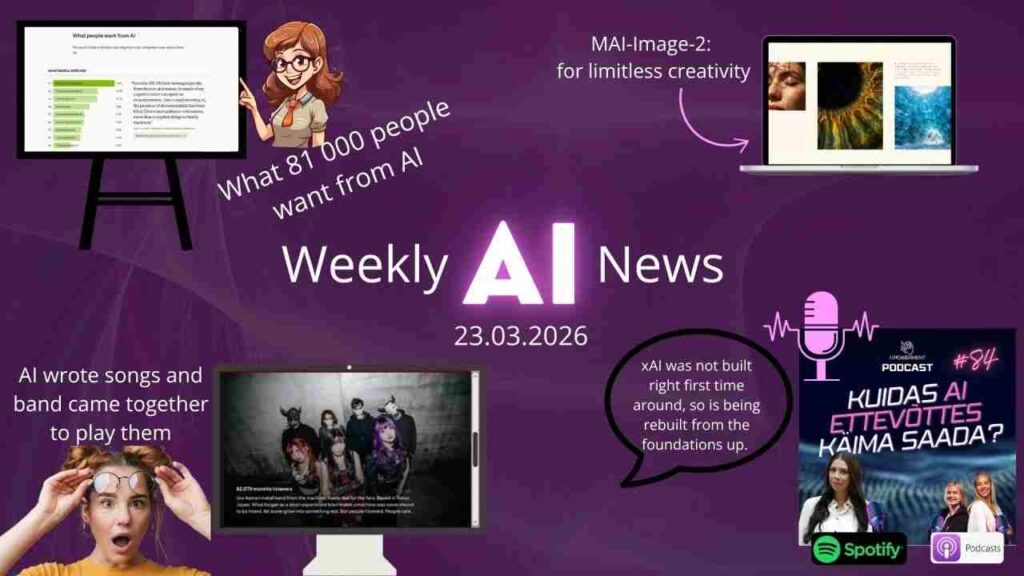
The most important news pieces from the AI world are here for you, whether you’re an AI enthusiast or just wish to keep an eye on what’s going on.
Focus Topic: ARC-AGI-3 exposes the illusion of AI reasoning
A new AI benchmark just dropped – and it made every top model look broken overnight. ARC-AGI-3, released by François Chollet’s ARC Prize Foundation, shows that even the most advanced systems score below 1%, with leaders like Gemini, GPT, and Claude barely registering results. For models that dominate most benchmarks, this kind of reset is rare – and telling.
But this isn’t new for ARC. Every time a new version is released, scores collapse to near zero – and then, surprisingly fast, they rise again. With the previous iteration, labs pushed performance from just a few percent to around 50% in under a year. That pattern raises a deeper question: are models actually learning to reason, or just getting better at optimizing for the test?
To understand why this keeps happening, you need to look at how ARC evolved. The original ARC tests were static puzzles – small grid-based tasks where models had to infer hidden rules. No instructions, no prior examples. ARC-AGI-2 pushed this further, and labs poured resources into optimizing for it, driving scores from near zero to around 50% in less than a year. But much of that progress came from scaling compute and clever search strategies, not necessarily true reasoning.
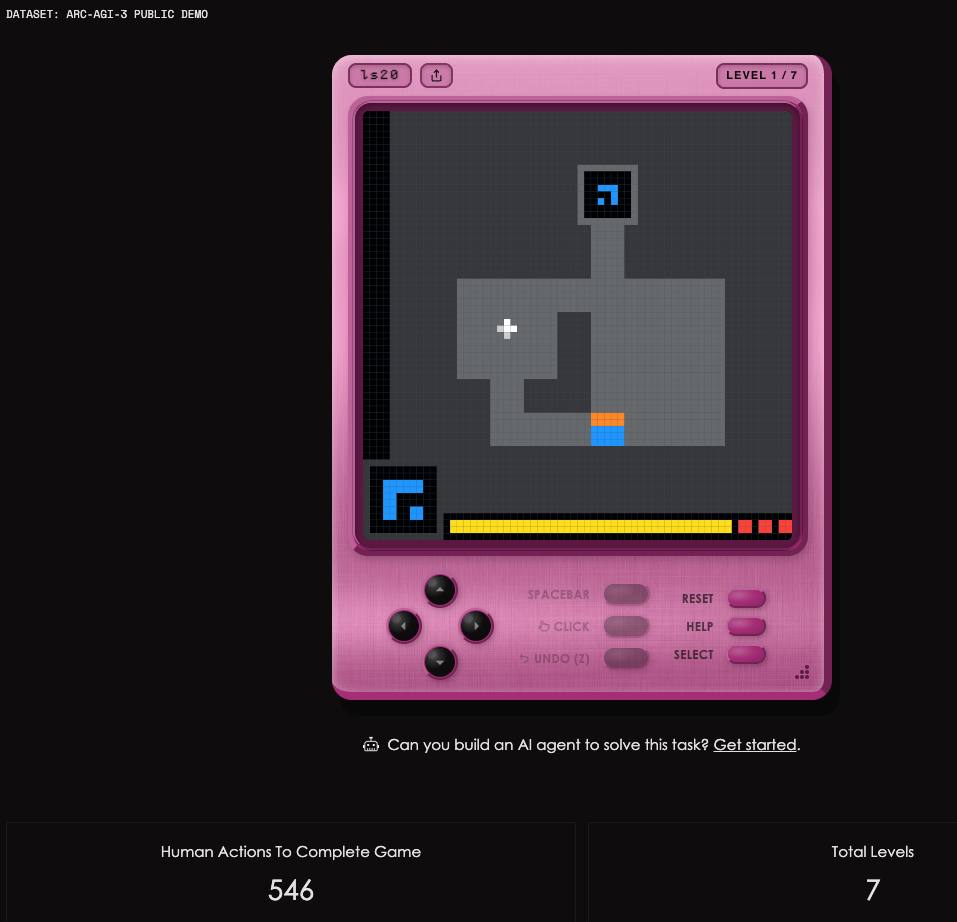
ARC-AGI-3 changes the rules completely. Instead of solving fixed puzzles, AI agents now operate inside interactive environments. There are no instructions. Models must explore, figure out what matters, set their own goals, and adapt over time. The benchmark measures not just outcomes, but how efficiently an agent learns, plans, and updates its understanding step by step – much closer to how humans approach new problems.
This is why scores reset again. ARC-AGI-3 is designed to break shortcuts and make brute-force approaches less effective. But if history repeats, performance will rise quickly. And that’s the real story to watch: whether the next jump reflects genuine reasoning – or just a more expensive way to simulate it.
LLMs & AI Models
- Claude gains autonomous capabilities, allowing it to run builds, tests, and scheduled tasks directly on user machines with new tools like Dispatch and /loop.
- Meta’s TRIBE v2 simulates brain activity across vision, speech, and language, outperforming fMRI accuracy using large-scale brain data.
- OpenAI pauses erotic chatbot development after internal and investor concerns, delaying the feature indefinitely.
- OpenAI shuts down Sora development to focus on a new model “Spud”, reallocating resources toward higher-impact systems.
- Claude Projects launches on desktop, enabling users to import and manage workflows directly inside Anthropic’s environment.
New Tools
- Apple opens Siri to multiple AI models, letting users choose providers beyond ChatGPT, with integration tied to upcoming iOS updates.
- Suno v5.5 adds voice cloning, custom models, and personal style learning, expanding control for music generation.
- Google upgrades Lyria 3 Pro, generating full-length songs up to 3 minutes with structured musical elements.
- Figma opens to AI agents, allowing tools like Claude Code to create and edit designs using existing components.
- Luma AI releases Uni-1, a multimodal model that reasons before generating images, producing complex visuals at lower cost.

3 new transcription tools:
- Cohere releases Transcribe, an open-source speech recognition model leading HuggingFace benchmarks across 14 languages.
- Google launches Gemini 3.1 Flash Live, improving voice speed, realism, and task execution across Search, Gemini Live, and APIs.
- Mistral introduces Voxtral TTS, enabling voice cloning from 3 seconds and generating speech in 9 languages.
Other Quick Picks
- EU extends AI Act deadlines, adding stricter rules and bans on nudifier tools, while giving companies more time to comply. I wrote about it here.
- Wikipedia bans AI-written articles, allowing use only for grammar and translation under human supervision.
- Reddit moves to label AI bots, introducing [App] tags and verification flows to separate humans from automation.
- US launches SMS-based AI training, offering a 7-day course via text messages to improve AI literacy.
- AI creates new opportunities but highlights gender gaps, as systemic barriers still limit women in deep tech.
- Apple tests standalone Siri app and chatbot, enabling text and voice queries with deeper app integration.
- Meta accelerates internal AI agents, with tools like “Second Brain” and “CEO agent” reshaping workflows.
- Nvidia’s Jensen Huang claims AGI is here, defining it as AI capable of building billion-dollar businesses. Check out the interview with Lex Friedman here.
- Elon Musk plans $25B AI chip factory, aiming to scale compute 50x beyond current global capacity.
- AI transforms livestock farming, with Halter using real-time data and virtual fencing to optimize operations.
🇪🇪 AI News from Estonia
- Äripäev AI conference highlights real business value, showing how companies move from hype to productivity and higher salaries. Register here.
- Vibe coding is growing rapidly, with ~100,000 daily projects, lowering barriers but raising security and quality risks. Read here.
- President Karis stresses trust in digital state, emphasizing governance, security, and data responsibility in AI adoption in London at Global Government Forum.
- ITL Estonia awards AI innovation leaders, including Better Medicine and Rollo Robotics, reflecting AI’s impact across sectors. Read here.
- 35% of Estonian workers fear AI impact, while many already see automation improving speed and performance according to CV.ee | CV-Onlineresearch.
🎙️ AIPowerment Podcast dropped a new episode episode featuring Marju Sokman, a marketing and communication expert, discussing AI in marketing, content creation, and training systems.
🎧 Listen to AIPowerment Podcast on Spotify, Apple Podcasts, and YouTube.
Want to stay in the loop?
Straight to your inbox: practical AI updates, finance use cases, tools to try, and upcoming trainings.
I cut the noise and send only what’s actually useful.
💼 Exploring how to make AI work in finance? Let’s talk practical use cases – connect with Gerlyn Tiigemäe for expert guidance.
📚 If you would like to participate in one of my trainings or listen to speaking engagements, here are the upcoming ones:
- Training “AI võimalused finantsvaldkonnas” @ Äripäeva Akadeemia, next trainings for beginners @ 14.05 – information; for intermediate level @ 13.04 – information
- Training “AI võimalused projektijuhtimises” @ Äripäeva Akadeemia, next trainings in @ 31.03 – information
- Training “Tehisintellekti praktiline rakendamine finantstöös” by Koolitusturg @ 07.04.2026 – information
- Training “AI assistendi roll ja võimalused” by areng . ee @ 16.04.2026 – information
- Free training “Tehisaru sisuloomes ja turunduses” by Töötukassa @ 08.04.2026 – information