

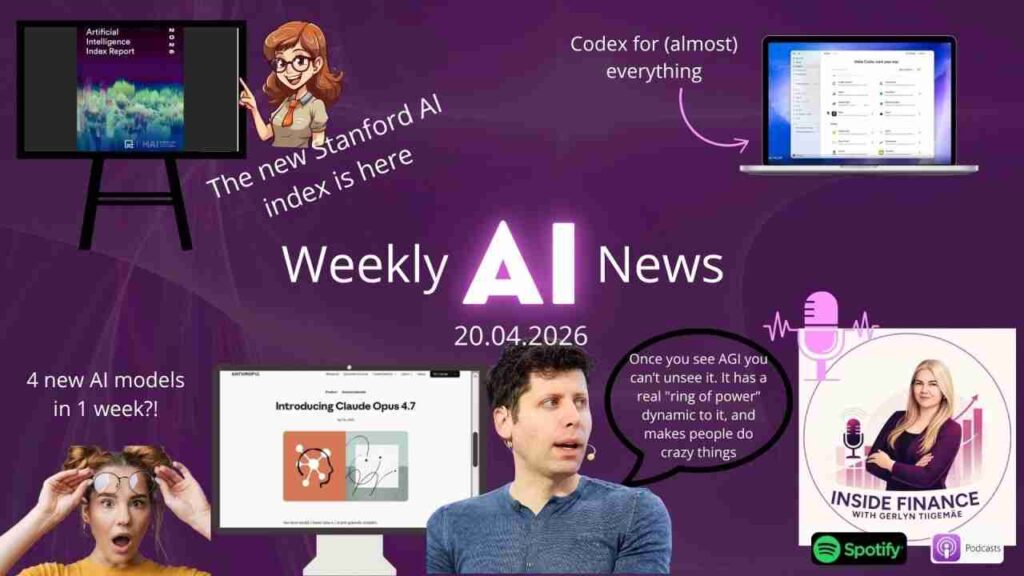
The most important news pieces from the AI world are here for you, whether you’re an AI enthusiast or just wish to keep an eye on what’s going on.
Focus Topic: 5 new AI models this week - here’s what to know about them (only the most important part)
This week was a good example of how messy the AI market is becoming. In just a few days, we saw five important launches, but they were not competing in exactly the same category. That is what makes it confusing. At first glance, it looks like “more new models again”, but the real story is that AI companies are now building for very different use cases. Some are trying to become your daily work environment, some are pushing deeper into expert tasks, and some are moving into highly specialized industries. The challenge for users is no longer just keeping up with releases. It is understanding what each model is actually for.
The clearest shift is that general AI assistants are turning into systems that can do real work across tools. Codex is no longer just a coding assistant – OpenAI is clearly expanding it into a broader work platform that can operate your computer, use apps, browse, remember preferences, and continue tasks over time.
Perplexity Personal Computer points in a similar direction, but from a different angle: not as a developer tool first, but as an AI orchestrator for your files, apps, connectors, and web tasks. The most important takeaway here is that both companies are pushing beyond chat. They want AI to become an active layer on top of your whole computer.
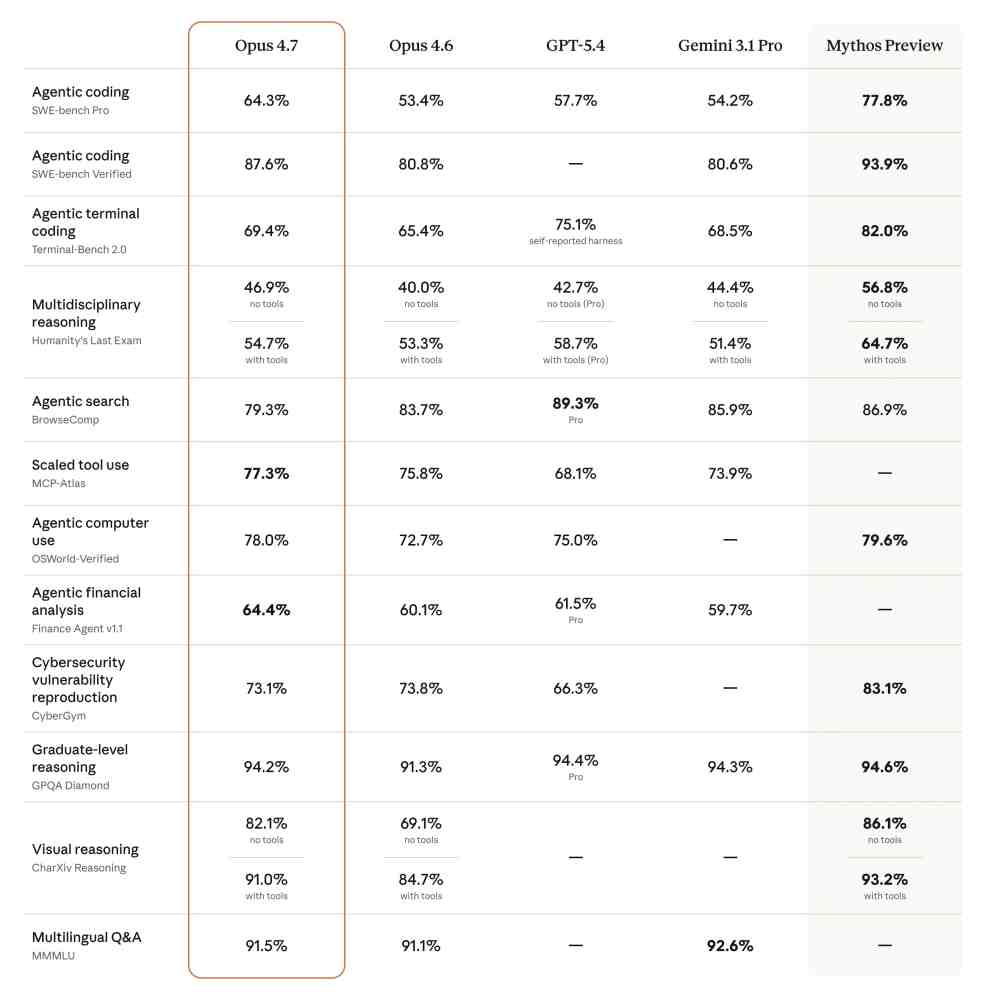
At the same time, some launches were not about breadth, but depth. Claude Opus 4.7 is the strongest example of that. Its main value is not that it does everything, but that it handles difficult, long-running work more reliably, especially in software engineering and complex professional tasks. It also improves vision, instruction-following, and memory across longer workflows.
GPT-5.4-Cyber is even more focused – it is not meant for everyone, but for verified cybersecurity professionals who need fewer restrictions for defensive work like vulnerability research and reverse engineering. GPT-Rosalind goes one step further and shows where frontier AI is heading next: models designed for one serious field, in this case life sciences, where the value comes from helping researchers analyze literature, plan experiments, and generate better hypotheses faster.
So the big picture is this: these launches are not just five more model updates. They show three major directions in AI right now. First, AI is becoming more agentic and more embedded into the computer itself. Second, frontier models are becoming more dependable for harder professional work. Third, the market is splitting into specialized systems built for fields like cybersecurity and science. That is the most important thing to understand from this week. We are moving away from one-model-fits-all, and into an AI landscape where picking the right model for the right job matters more than ever.
LLMs & AI Models
- OpenAI updated Codex into a broader AI workspace with computer use, memory, agents and automation, signaling a clear move toward a superapp direction.
- Anthropic launched Claude Opus 4.7, improving complex coding, long tasks and instruction accuracy, though real-world feedback remains mixed.
- OpenAI introduced GPT-Rosalind, a life sciences model that can analyze research, design experiments and outperform experts in specific biology benchmarks.
- Google released Gemini as a native Mac app, enabling desktop AI workflows with file access and generation, but still behind in agent capabilities.
- OpenAI launched GPT-5.4-Cyber, a cybersecurity-focused model with fewer restrictions, available to verified professionals for defensive use cases.
- Nvidia introduced Ising AI models for quantum computing, improving calibration and error correction speed and accuracy across research institutions.
- Microsoft is developing 365 Copilot agent features, enabling always-on agents inside Office apps, with preview expected soon.
- Anthropic is changing Claude Enterprise pricing to token-based billing, potentially increasing costs for heavy users.
New Tools
- Adobe introduced Firefly AI Assistant, enabling agent-based creative workflows across Photoshop, Premiere, Lightroom and Firefly apps.
- Google launched Gemini 3.1 Flash TTS, allowing control over tone, speed and accent via audio tags, ranking high in TTS benchmarks.
- Anthropic upgraded Claude Code desktop app with multi-session workspace, editor, terminal and routines automation for developers.
- Harvey released AI legal agents, capable of handling end-to-end legal workflows from research to memos across 13 domains.
👉 Explore these tools: Adobe Firefly | Gemini 3.1 Flash TTS | Claude Code | Harvey Agents
Other Quick Picks
- Allbirds is pivoting to AI infrastructure, raising $50M to become NewBird AI and offer GPU compute services after exiting its core footwear business.
- Snap is laying off 1000 employees (16%), citing AI-driven productivity, with AI now generating 65% of new code internally.
- An AI agent Luna opened a retail store in San Francisco, managing hiring and operations, but still showing mistakes in real-world execution.
- Stanford’s AI Index 2026 shows 53% global adoption, but only 31% trust in institutions, highlighting a growing gap between usage and confidence.
- A Molotov attack on Sam Altman’s home triggered a response where he acknowledged real AI fears and societal tensions around the technology.
- AI analysis of 400K Reddit posts revealed new GLP-1 drug side effects, showing how models can uncover patterns missed in clinical trials.
- OpenAI investors are questioning Sam Altman’s IPO leadership, citing distractions and potential conflicts of inte
🇪🇪 AI News from Estonia
- Estonian experts argue AI procurement models are broken, as hour-based pricing ignores real outcomes and may push top talent away from public sector projects.
- Estonia is planning €6.5B in EU funding investments, with major focus on AI, infrastructure, energy and security, though demand already exceeds supply.
- The Digital Society 2035 plan aims to build an AI-powered, personalized state, where services are automated and resilient even during crises.
- An Estonian expert built a virtual AI CTO, showing that with the right setup of rules, skills and workflows, agents can operate at leadership level.
- Discussion around Anthropic Mythos risks reached Estonian media (watch Terevisioon), highlighting concerns about AI discovering critical vulnerabilities autonomously.
- Estonian startup Phishbite received €100K funding to develop AI-driven cyberattack simulations, reflecting growing regional security needs.
🎙️ And I am extremely excited to announce that I launched my own very personal and very much-awaited podcast: Inside Finance with Gerlyn Tiigemäe.

This has been a long time coming – months of planning, doubting, rethinking, and finally bringing it to life. Inside Finance is a video podcast where I sit down with CFOs, advisors, and finance leaders to talk about what AI is actually changing in finance teams – no hype, just real conversations about what works and what does not.
The first episode is already live, and I could not have asked for a better guest to start with. I sat down with Mari-Liis Kikas, a fractional CFO who has worked across more than 10 companies and brings a very honest view into what finance teams are really struggling with when it comes to AI adoption.
We talked about what it actually takes to become AI-ready in finance, why clean books do not automatically mean strategic readiness, and why people and processes still matter more than tools. I truly can’t wait for you to listen and hear what you think.
🎧 Listen to Inside Finance Podcast on Spotify, Apple Podcasts, and YouTube.
Want to stay in the loop?
Straight to your inbox: practical AI updates, finance use cases, tools to try, and upcoming trainings.
I cut the noise and send only what’s actually useful.
💼 Exploring how to make AI work in finance? Let’s talk practical use cases – connect with Gerlyn Tiigemäe for expert guidance.
📚 If you would like to participate in one of my trainings or listen to speaking engagements, here are the upcoming ones:
- Training “AI võimalused finantsvaldkonnas” @ Äripäeva Akadeemia, next trainings for beginners @ 14.05 – information;
- Training “AI võimalused projektijuhtidele” @ Äripäeva Akadeemia, next trainings @ 15.06 – information