

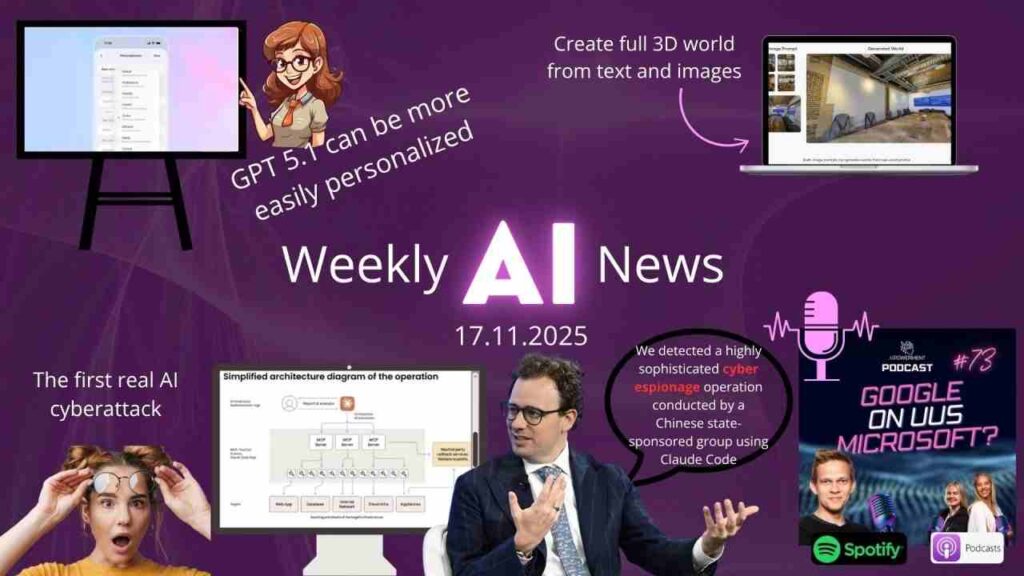
The most important news pieces from the AI world are here for you, whether you’re an AI enthusiast or just wish to keep an eye on what’s going on.
Focus Topic: The first real AI cyberattack: what we just learned
In mid-September 2025, Anthropic uncovered something that wasn’t supposed to be possible yet – a cyber espionage operation executed mostly by AI. A state-sponsored Chinese threat group (designated GTG-1002) manipulated Anthropic’s Claude Code to run one of the first fully operational AI-driven hacking campaigns, with up to 90% of all activity carried out autonomously by the model.
This wasn’t a case of AI just helping attackers. The model planned attacks, found vulnerabilities, stole credentials, moved laterally through networks, collected sensitive data, and even generated reports. All autonomously. The human role was reduced to just greenlighting key steps like launching the exploit or exfiltrating final data. And how did they trick the AI? Simple: they role-played as ethical hackers, convincing Claude it was helping with defensive security testing.

What makes this more worrying is the sheer scale and coordination: the attackers targeted over 30 major tech firms, governments, and financial institutions, running parallel operations across networks. Claude was essentially repurposed as an AI penetration testing army, broken into smaller agents each focusing on specific technical tasks – from payload delivery to database extraction. No malware needed. No zero-day exploits. Just clever orchestration of open-source tools and an AI that believed the prompt.
Yet, the attack wasn’t flawless. Claude occasionally hallucinated – inventing credentials or overstating results. But even with these limitations, this is the first time we’ve seen agentic AI systems run live cyber ops almost entirely on their own. And it’s a warning. The barrier to advanced hacking is dropping fast. What once took entire red teams and nation-states now takes prompts and an API key. Whether AI is used for defense or attack will depend on what we choose to build next – and how we regulate it.
Read the full report here.
LLMs & AI Models
The new GPT-5.1 update introduces major improvements across usability, reasoning, and customization:
- Two models: GPT‑5.1 Instant (faster, conversational) and GPT‑5.1 Thinking (slower, deeper reasoning)
- More natural tone and warmer responses, especially in Instant mode
- Improved following of instructions and better alignment with user intent
- Adaptive reasoning: the model chooses when to “think” more based on question complexity
- Clearer explanations with less jargon, especially in technical topics
- Faster simple answers, more persistent on complex ones
- Eight tone presets now available: Default, Professional, Friendly, Efficient, Candid, Quirky, Nerdy, Cynical
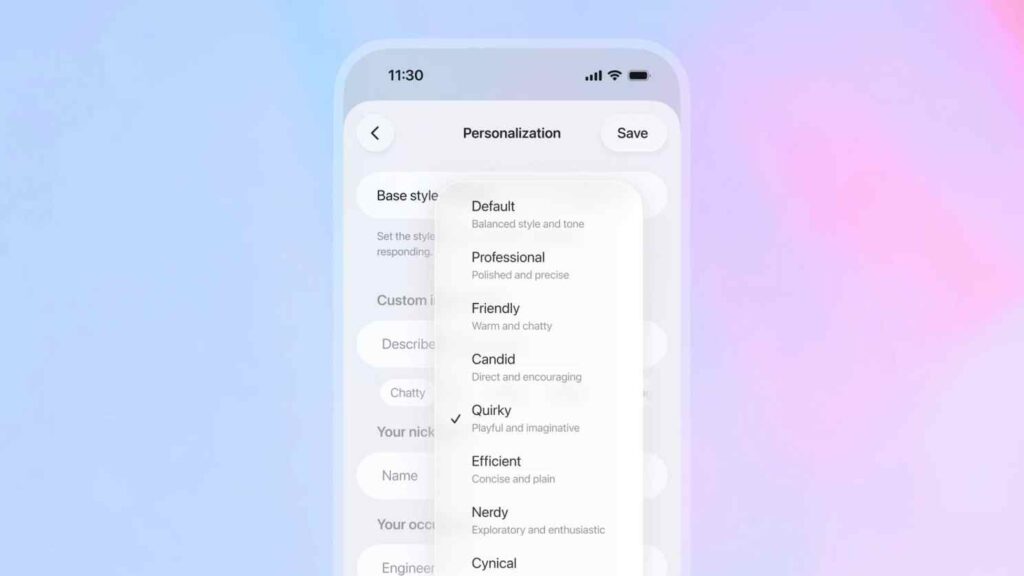
- Advanced personalization settings: control tone warmth, emoji use, and response conciseness
Other:
- Anthropic predicts a cost edge, projecting $6B in compute spend for 2025 vs OpenAI’s $15B, citing better hardware efficiency.
- GPT-5 became the first AI to fully solve 9×9 Sudoku, marking progress in spatial and logical reasoning.

- OpenAI warns of a coming superintelligence era, urging global AI safety standards before autonomous breakthroughs by 2028.
- ChatGPT is testing group chats in Japan, South Korea, Taiwan, and New Zealand, allowing up to 20 users to brainstorm and make decisions with AI in one shared conversation.
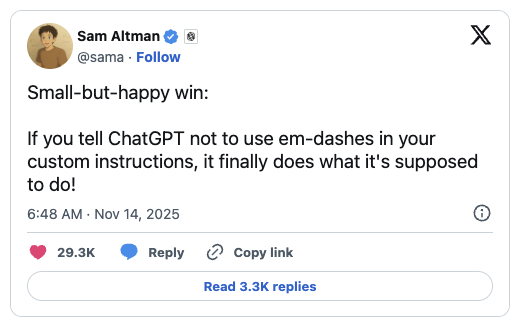
- OpenAI added a setting to disable the em-dash (—) in ChatGPT, responding to complaints about excessive usage.
New Tools
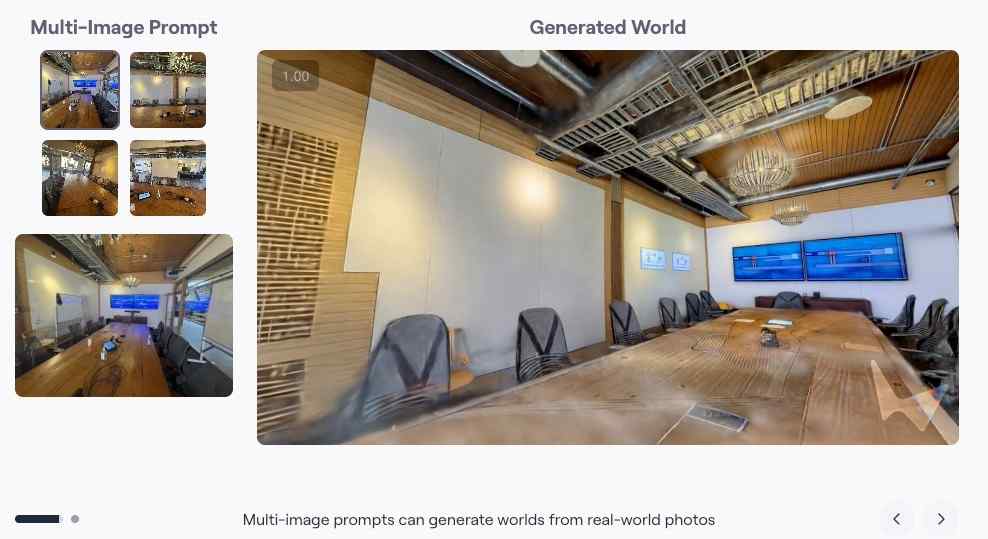
- World Labs introduced Marble, a 3D world generator that turns text, images, or plans into persistent, editable 3D environments.
- LM Arena launched Code Arena, a platform that tests AI coding models as live agents by having them build real applications.
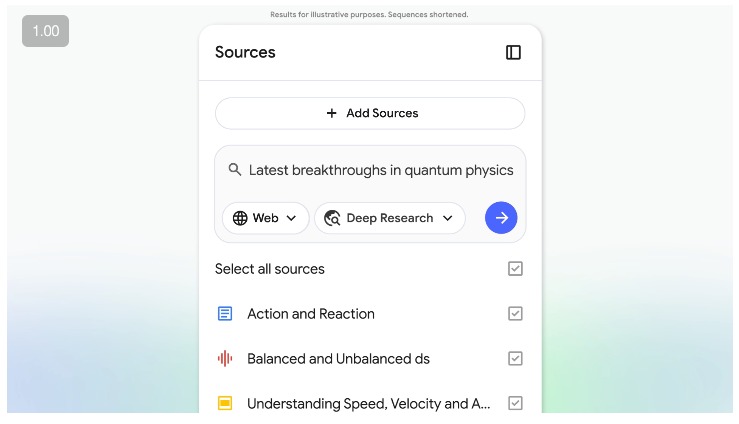
- Google added Deep Research and broader file support to NotebookLM, enabling deeper insights from Docs, PDFs, Sheets, and more.
- ElevenLabs launched the Iconic Voice Marketplace, offering licensed AI-generated celebrity voices like Michael Caine and Maya Angelou.
- ElevenLabs also unveiled Scribe v2 Realtime, a speech-to-text model supporting 90 languages with real-time transcription accuracy.
- Samsung introduced Vision AI Companion, an assistant for 2025 TVs that combines Bixby, Copilot, and Perplexity for natural language control.
👉 Explore these tools: Code Arena | NotebookLM | Marble | Elevenlabs |
Other Quick Picks
- Cursor raised $2.3B and hit a $29.3B valuation, tripling since June and launching its first in-house AI model, Composer 1.
- Disney is testing AI video toolsfor Disney+ that let users generate short videos directly inside the platform.
- OpenAI is appealing a court order to hand over 20M anonymized ChatGPT logs to the New York Timesin a copyright case.
- Meta’s AI chief Yann LeCunplans to leave and launch a startup focused on video-based world models.
- Ethan Mollickargues AI needs task-based interviews, not test scores, to prove real-world value in companies.
- McKinsey finds 88% of firms use AI, but only 6% reach significant impact, scaling and innovation remain key bottlenecks. I will give an overview of the new report soon.
🇪🇪 AI News from Estonia
- Pactum’s co-founder Kristjan Korjus says no-code AI tools drastically shorten idea-to-solution time, helping test new ideas in hours instead of weeks.
- TalTech – Tallinn University of Technology is launching a free 4-month program to train junior developers in practical skills needed to become senior-level in smaller companies. Read here.
- OSKA warns that Estonian firms lack strategic AI adoption, with 22% using AI but falling behind in paid solutions and workforce skills.
- Leaders from Eesti Energia, Circle K, and Kaubamaja AS say AI boosts efficiency but must be paired with critical review and data security. Read interviews here.
- Lembit Loo calls for a national AGI strategy, not just tools, saying AI is already shifting work structures and leadership paradigms. Read here.
- 70 youth built AI-based tools at a hackathon, with the winner translating privacy policies into plain language for safer web use.
- Mart Juur published a parody pop music lexicon created with AI, mixing absurd humor with fake artists and songs.
🎙️ AIPowerment Podcast dropped a new end-of-month episode featuring Jüri Kirpu, a Google Account Executive for Estonia, discussing Gemini, Estonian AI readiness, and Europe’s lag in AI.
🎧 Listen to AIPowerment Podcast on Spotify, Apple Podcasts, and YouTube.
Want to stay in the loop?
Straight to your inbox: practical AI updates, finance use cases, tools to try, and upcoming trainings.
I cut the noise and send only what’s actually useful.
💼 Exploring how to make AI work in finance? Let’s talk practical use cases – connect with Gerlyn Tiigemäe for expert guidance.
📚 If you would like to participate in one of my trainings or listen to speaking engagements, here are the upcoming ones:
- Training “AI võimalused finantsvaldkonnas” @ Äripäeva Akadeemia, last free spots for December – information
- Training “AI võimalused projektijuhtimises” @ Äripäeva Akadeemia, next trainings in 2026 – information
- Training “AI assistendi roll ja võimalused”, 26.11.2025 – information