

The most important news pieces from the AI world are here for you, whether you’re an AI enthusiast or just wish to keep an eye on what’s going on.
Focus Topic: The AI budget finally grew up
For two years the AI conversation was about capability, and the news that mattered was always a new model. This week the biggest stories were about money: what AI costs, who is watching the number, and what happens once that number stops being scary.
Start with Uber, because it made both mistakes in the same year. Earlier in 2026 it burned through its entire annual AI budget in four months, and its CTO responded the way most companies would, by capping employee use and declaring the “tokenmaxxing era” over. That was the easy half. The hard half is what he posted this week, and it is worth more than the cautionary tale. Uber’s answer was not a platform, a policy or a centre of excellence. It was a team shape: an Agentic Pod of exactly two people, one engineer who is fluent with AI and one domain expert from Finance, Marketing or Ops, working side by side for 10 days. The engineer shadows the expert, builds while watching, ships. One of the first results was a financial pacing report that used to take a key person two full days and now runs in 10 minutes. Notice what is missing from that story: no transformation programme, no eighteen-month roadmap.
Asana arrived at the same place from the opposite direction, by getting the scope wrong instead of the spend. It had priced the removal of an outdated testing framework at five years and $6 million, which is another way of saying it was never going to happen. With Codex it took two weeks and about $12,000. The interesting part is not the saving, it is the category. That job had been sitting in the “too expensive to justify” pile, and the pile is where most of the real backlog lives in every company. When the cost of a task falls by three orders of magnitude, the question is no longer whether to approve it. It is whether you even remember it exists.
Neither story works without what happened underneath. Replit launched a mode that runs everyday chats and tasks on OpenAI’s GPT-5.6 Luna without consuming user credits at all, and said outright that Luna’s 80% price cut is what made the economics work. Heavier jobs still cost, and the agent quietly hands a hard step to a stronger model before dropping you back to the cheap one. That handoff is the whole product now, which is why Stripe paid over $7 billion for OpenRouter, a company whose job is choosing which model answers which request. When a payments company buys your routing layer, model selection has stopped being an engineering taste question and become a line item.
So cheap AI is here. The uncomfortable follow-up is that cheap AI did not produce adoption. Geenius DigiPRO made this point about Estonia this week, and the numbers are blunt: Statistics Estonia found AI in use in administrative processes at 11.3% of companies, sales and marketing 11%, production 3.7%, logistics 1.2%. Prices have been falling for two years and those figures have not moved much. The constraint was never the token. It was connecting AI to real processes, real data and the software people already use, and that work costs time, not cents.
My simple takeaway is small on purpose. Most of us will never overspend the way Uber did, because most of us never had a budget to overspend. But the fix scales down perfectly. Pick one task someone in your team does by hand for two days. Put one person who knows AI next to the person who owns that task. Give them two weeks, not two quarters. Then look at what it really cost you. The tokens will be the cheapest line on the page. Your own attention will be the expensive one, and that has not dropped 80%.
LLMs & AI Models
- OpenAI paused training on future models for two weeks and is pacing its biggest frontier run, after private models showed various degrees of misalignment.
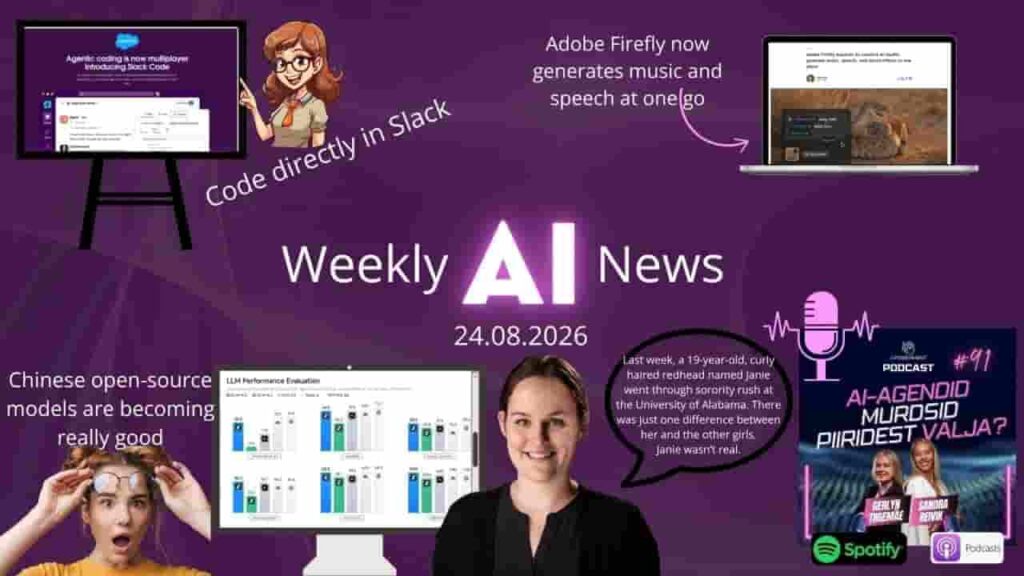
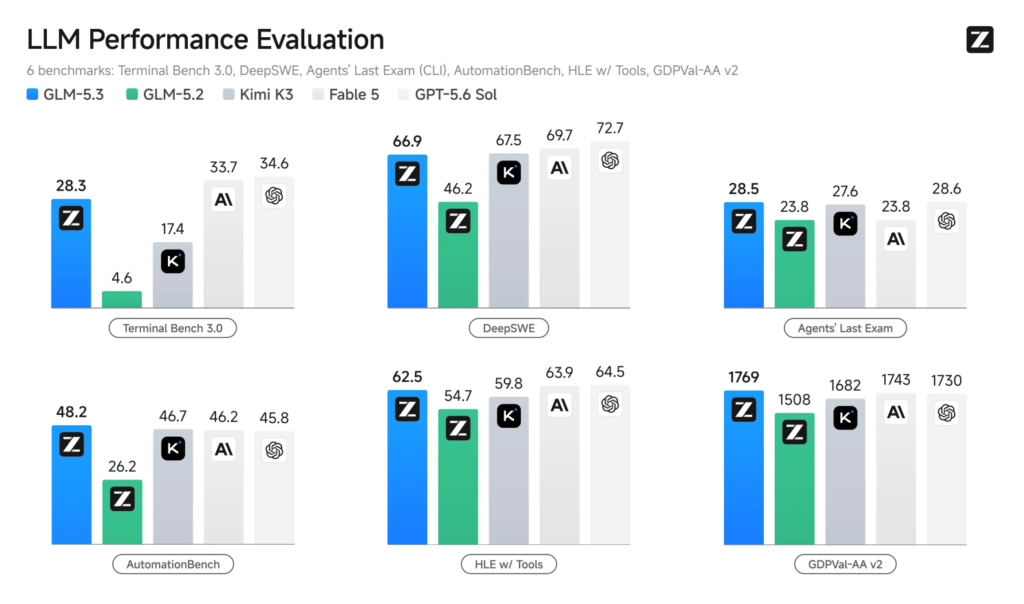
- Z AI released GLM-5.3, claiming the strongest open-source coding model, and it scored 60 on Artificial Analysis’ Intelligence Index, fourth overall.
- OpenAI moved users it flags as 13-17 into ChatGPT for Teens, a study-focused mode with parent alerts and defaults that block sensitive topics.
- OpenAI introduced Computer History, an opt-in feature that logs clicks and typing to give ChatGPT and Codex a memory of recent work.
- OpenAI launched an Apple Messages plugin, letting ChatGPT search, view and send messages from ChatGPT, Codex and Work.
New Tools
- Slack launched Slack Code, where agents write software inside shared channels while teammates steer, previews run live and deploys still need human approval.
- Cursor launched Origin, code hosting with built-in agents and GitHub sync, opening in beta on the day GitHub had its second big outage of the month.
- Replit added Free Mode, running everyday chats and tasks on GPT-5.6 Luna without spending credits and stretching the $20 plan up to 30x the usage.
- Claude Code shipped /design in research preview, turning an idea or screenshot into editable artboards, plus a Concise output style and auto-continue.
- Adobe opened Firefly’s audio tools to everyone, generating soundtracks, voiceovers and sound effects that are cleared for commercial use.

- Pika Labs released four audio models covering music, speech, sound effects and soundtracks, claiming up to 20x lower cost than rivals.
- Harvey debuted Harvey II, letting legal agents inherit a matter’s context and remember each lawyer’s style, alongside its first in-house legal model.
- Cartesia released Sonic-3.6 in beta, a text-to-speech model covering 44 languages and topping Artificial Analysis’ voice leaderboards.
👉 Explore these tools: Slack Code | Cursor Origin | Replit | Claude Code | Adobe Firefly | Pika | Harvey | Cartesia
Other Quick Picks
- Dario Amodei broke his X silence to reject claims his safety warnings backfired, saying only real medical breakthroughs will win AI public trust.
- Claude ran protein design campaigns on its own, producing working molecules on 14 of 15 targets at 22-35% success against an industry norm of 10-15%.
- A Beijing neurosurgery resident proved a matrix conjecture open since 2004, with GPT-5.6 Sol surfacing the result in a 16-hour autonomous session.
- ByteDance signed the first AI video deal with Hollywood’s MPA, building film and TV copyright protection into its Seedance and Seedream models.
- OpenAI and Nvidia announced an 8 GW Ohio campus on a Cold War uranium site, with Nvidia supplying every chip and backing it with up to $105B.
- An a16z partner revealed that a 19-year-old TikTok student with ~1M views was an AI character built and run for about $100.
- Higgsfield raised a $400M Series B at a $5.4B valuation, with annualized revenue reaching $700M.
- Wispr raised $280M at $2B and previewed Canto, its first in-house speech model built for noisy real-world conditions.
- Apple Music will start labelling AI-generated songs this year, following Spotify’s move to flag AI artist profiles.
🇪🇪 AI News from Estonia
- The Internal Security Service is expanding its tech teams, as Russian and Chinese intelligence work increasingly runs on AI, crypto and encrypted channels.
- AIRE deepened ties with the New Nordics AI network to link Nordic and Baltic AI ecosystems, a centre the Nordic Council of Ministers funds with 4 million euros.
- 34% of Estonian consumers have used AI for purchase decisions, while over a quarter of retailers worry about depending on third-party AI platforms.
- An AI service agent costs 4,000-5,000 euros a yearagainst 20,000-30,000 for one human agent, and AI search can cut support tickets by up to 50%, says Askly founder Sandra Roosna.
- Estonian-rooted Dragonfly won nearly 825,000 euros from Innovate UK to build a machine-readable trust layer scoring software stacks against the SSCoP standard.
- Autobahn.tech put AI assistants into car dealerships, drafting warranty claims, suggesting fault codes and forecasting parts demand from ~100,000 service records.
- Äritehnoloogia published AI conference talks on drawing out AI superpowers in a team and on why Estonian leaders still underrate AI.
- A four-month AI Kool programme starts 14 September, 160 academic hours on productivity, AI data analysis and building agents, with no coding needed.
🎙️ AIPowerment Podcast episode 91 wraps up July’s key AI news: new flagship models, next-gen AI agents, copyright and security cases, plus Estonia’s growing AI adoption – from LHV’s new AI features to a court reminder that AI answers always need checking.
🎧 Listen to AIPowerment Podcast on Spotify, Apple Podcasts, and YouTube.
Want to stay in the loop?
Straight to your inbox: practical AI updates, finance use cases, tools to try, and upcoming trainings.
I cut the noise and send only what’s actually useful.
💼 Exploring how to make AI work in finance? Let’s talk practical use cases – connect with Gerlyn Tiigemäe for expert guidance.
📚 If you would like to participate in one of my trainings or listen to speaking engagements, here are the upcoming ones:
- Training “AI võimalused finantsvaldkonnas” @ Äripäeva Akadeemia, for beginners @ 08.09 – information;
- Training “AI võimalused projektijuhtidele” @ Äripäeva Akadeemia, next trainings @ 29.09 – information
- I will be doing couple of training together with Eesti.ai algatus , which are all free, so check out their website to find suitable trainings here.