

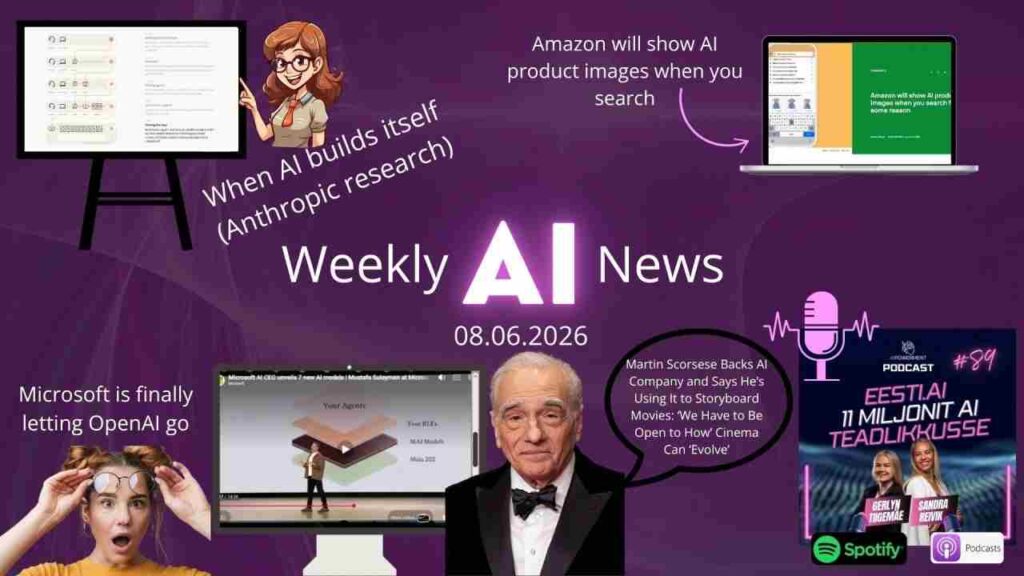
The most important news pieces from the AI world are here for you, whether you’re an AI enthusiast or just wish to keep an eye on what’s going on.
Focus Topic: When AI starts building the next AI
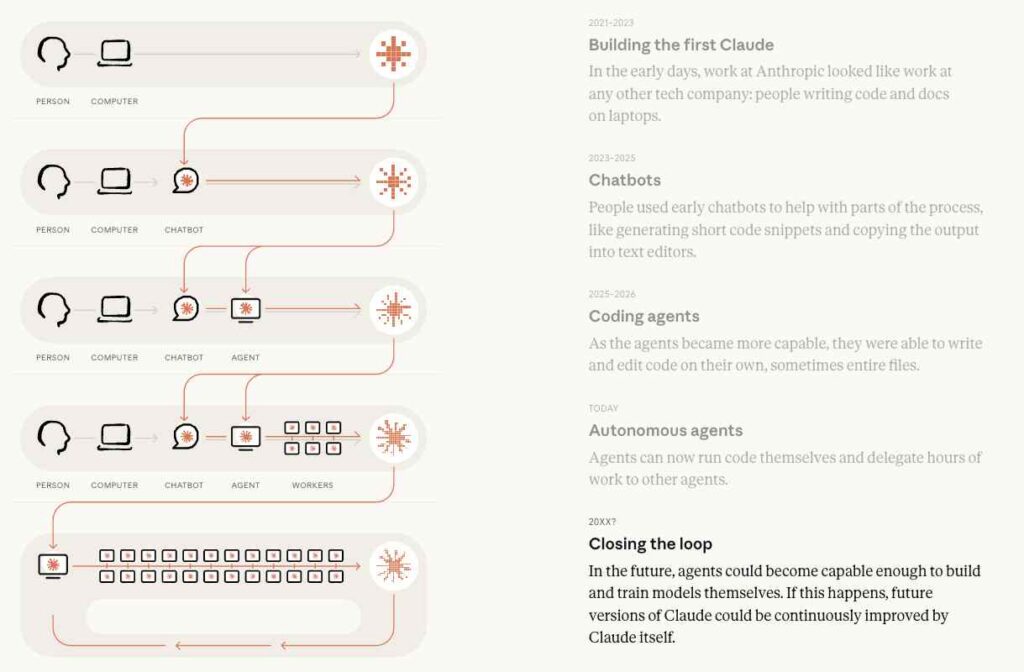
This week Anthropic published a report called “When AI builds itself,” and the numbers in it are hard to ignore. As of May 2026, more than 80% of the code Anthropic merges into its own codebase was written by Claude, up from low single digits just sixteen months earlier. The typical engineer now ships around 8x as much code as in 2024. In one internal test where Claude rewrites training code to run faster, it went from a roughly 3x speedup a year ago to about 52x now – on a task where a skilled human needs four to eight hours just to reach 4x. In other words, AI is no longer only answering our questions. It is increasingly doing the work that builds the next version of itself.
The term for the far end of this trend is recursive self-improvement: an AI capable of designing and training its own successor with little human input. We are not there, and Anthropic is careful to say it is not inevitable. The honest gap is judgment. Claude is now excellent at the “doing” – writing the code, running the experiment, fixing the bug – but humans still decide which problems are worth solving, which results to trust, and when an approach is a dead end. That taste and direction-setting is the last thing keeping a person firmly in the loop.
Why this matters even if the trend slows tomorrow: the cost of producing knowledge work is collapsing. Anthropic’s own framing is that a 100-person company starts to do the work of a 1,000-person one, because each employee sits on top of a pyramid of agents.
For finance and business teams, that flips where the bottleneck sits. It is no longer how fast you can produce a model, a report, or an analysis – it is how fast you can review it, decide on it, and trust it. The scarce skill is moving from execution to judgment, and that is a very different thing to hire and train for.
What makes the report worth reading is that it is not a victory lap. Anthropic openly weighs the risk of losing control of systems that build their own successors, and says it would support slowing or even pausing frontier development – but only if rival labs verifiably did the same, which today no one can guarantee. Some of their own engineers describe the strange feeling of watching the machine outpace them.
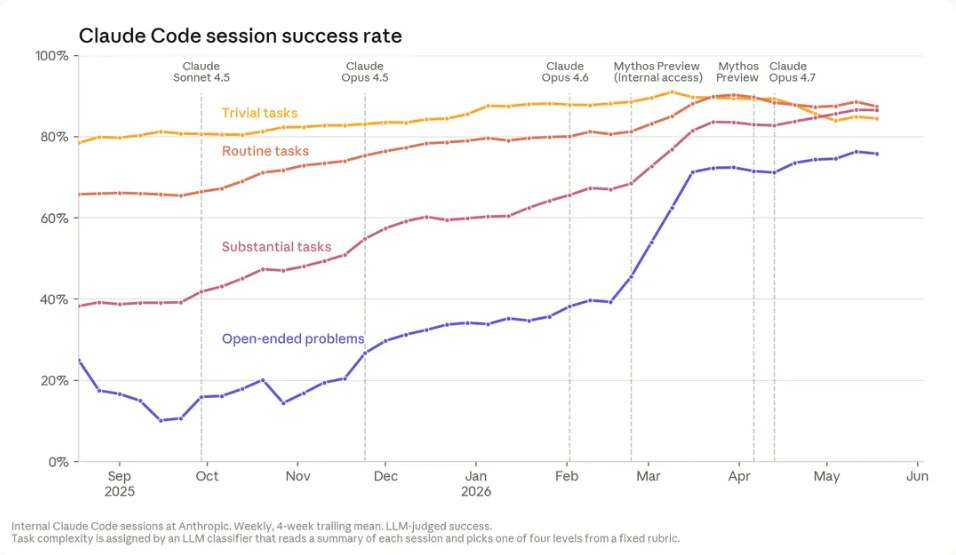
That tension, capability arriving faster than our ability to oversee it, is the real story of the week, and it is worth sitting with rather than cheering or dismissing.
LLMs & AI Models
- Google released Gemma 4 12B, a multimodal model that runs on a 16GB laptop and is its first model this size built for native audio.
- Microsoft used Build 2026 to launch seven in-house MAI models, an always-on Teams agent (Scout) and a quantum chip, cutting its reliance on OpenAI.
- OpenAI gave ChatGPT a memory overhaul it calls “dreaming,” turning past chats into a sorted profile and lifting factual recall from 41.5% to 82.8%.
- OpenAI rolled out Lockdown Mode, an optional setting that hardens ChatGPT against prompt-injection attacks by disabling Agent Mode, web images and downloads.
New Tools
- Two image labs went layout-first: Ideogram open-sourced Ideogram 4.0 and Reve launched Reve 2.0, letting you edit images by rewriting the layout, not the prompt.
- Android is rolling out fake-call detection that flags AI deepfake impersonation scams through a silent device-to-device handshake, on by default and starting on Pixel.
- OpenAI updated Codex with Sites for building and sharing hosted web apps, plus new role-specific plugins across different domains.
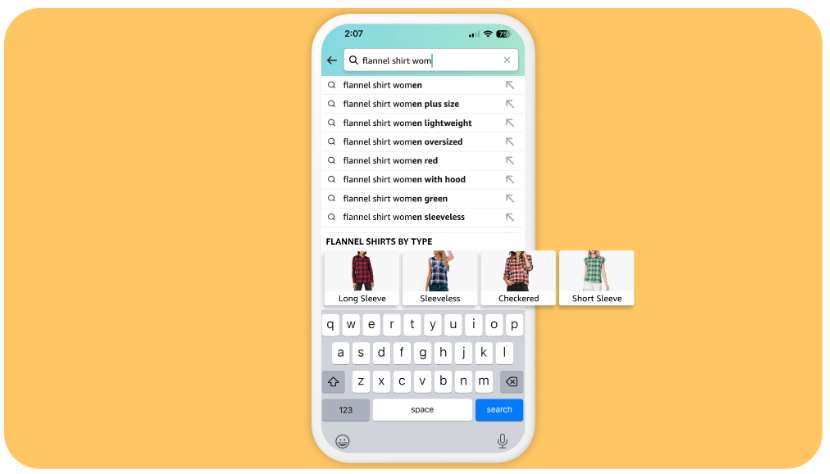
- Amazon now generates AI images of products that don’t exist as you type, to help shoppers find real items that match the made-up picture.
- Microsoft launched Scout, an always-on agentic assistant for Microsoft 365 built on OpenClaw that works across desktop and web and needs a Copilot subscription.
- Apple cut its Vision Pro roadmap to two products and is betting on smart glasses: display-less AI glasses due in 2027 and AR/XR glasses in 2029.
👉 Explore these tools: Ideogram 4.0 | Codex | Microsoft Scout | Amazon AI search
Other Quick Picks
- Anthropic confidentially filed with the SEC to go public, pushing forward in its race with OpenAI to reach the markets.
- Alphabet is selling $80B in stock to fund AI infrastructure, with up to $190B in spending planned this year.
- Florida filed the first state lawsuit against OpenAI and Sam Altman, alleging ChatGPT had a role in mass-shooting plans and self-harm.
- The Trump administration is in talks to take an equity stake in OpenAI, with proceeds seeding a public wealth fund.
- Google will pay SpaceX $920M a month from late 2026 for access to roughly 110,000 Nvidia GPUs and related compute.
- Meta is housing six AI data centers in giant tents near New Albany, Ohio, to add compute far faster than normal construction.
- CEOs of OpenAI, Anthropic, Google DeepMind and Microsoft urged Congress to make synthetic-DNA sellers vet buyers over bioweapon risks.
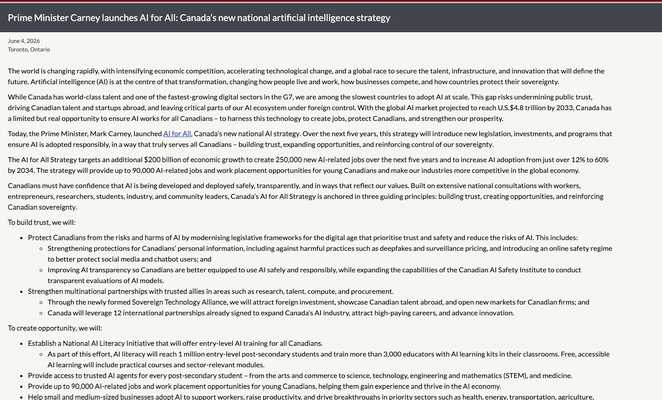
- Canada launched AI for All, a five-year strategy targeting $200B in growth and 250,000 AI jobs.
- Hackers hijacked Instagram accounts just by asking Meta’s AI to change the email and hand over access codes; Meta has since fixed it.
- Cloudflare says bot traffic has overtaken human traffic online, a milestone that arrived a year earlier than expected.
- Anthropic embedded engineers at the NSA to deploy Mythos, its most capable model, for offensive cyber operations.
- The US and Japan announced a $1B AI research partnership, with Japan the first country to join the US Genesis Mission
- A Stanford study found law professors preferred AI tutoring answers 75% of the time, with Claude Opus 4.7 topping every model.
- Director Martin Scorsese revealed he advises AI image startup Black Forest Labs and uses its FLUX model to storyboard a new film.
🇪🇪 AI News from Estonia
- A Helmes/Norstat survey found 48% of Estonians use AI tools at work, yet only 10% have clear workplace rules and just 6% have both rules and training.
- Urmo Keskel had Claude Opus 4.6 scan a state-built open-source library, and a two-line prompt surfaced 23 vulnerabilities, including one critical.
- Tallinn Technology College saved about €60,000 and five months by using AI to analyze sites and draft marketing copy for 58 curricula.
- Helmes gave developers a dedicated AI day, with founder Jaan Pillesaar saying learning shouldn’t come out of billable client hours.
- Starship Technologies is exiting US campus delivery to focus on city grocery delivery, cutting jobs including about 20% of its Estonian staff.
- Tele2 says AI has reshaped the whole sales chain, as customers arrive already informed and sellers must shift from informing to advising.
🎙️ AIPowerment Podcast dropped a new episode of AI news covering OpenAI’s strategy shift, Claude’s growth, AI tools, and Estonia’s AI developments.
🎧 Listen to AIPowerment Podcast on Spotify, Apple Podcasts, and YouTube.
Want to stay in the loop?
Straight to your inbox: practical AI updates, finance use cases, tools to try, and upcoming trainings.
I cut the noise and send only what’s actually useful.
💼 Exploring how to make AI work in finance? Let’s talk practical use cases – connect with Gerlyn Tiigemäe for expert guidance.
📚 If you would like to participate in one of my trainings or listen to speaking engagements, here are the upcoming ones:
- Training “AI võimalused finantsvaldkonnas” @ Äripäeva Akadeemia, next trainings for beginners @ 31.07 – information
- Training “AI võimalused projektijuhtidele” @ Äripäeva Akadeemia, next trainings @ 15.06 – information
- I will be doing couple of training together with Eesti.ai algatus , which are all free, so check out their website to find suitable trainings here.