

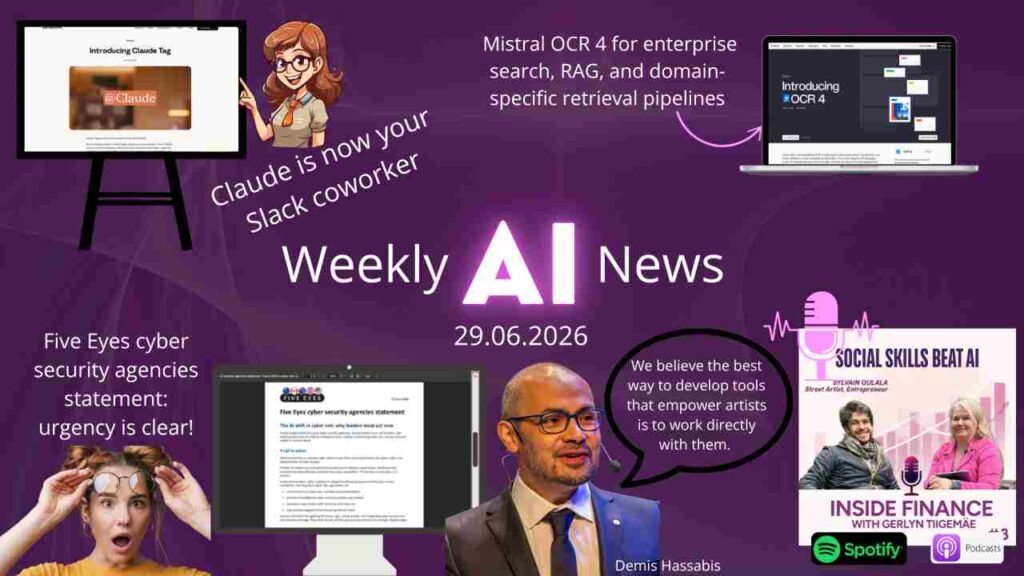
The most important news pieces from the AI world are here for you, whether you’re an AI enthusiast or just wish to keep an eye on what’s going on.
Focus Topic: AI's quietest breakthroughs are happening in the lab
Most of this week’s headlines were about chips, compute and which models the government will allow. But three quieter stories point somewhere more consequential: AI is becoming a working instrument in medicine and biology, where the timelines are longer and the payoff is measured in health outcomes, not engagement.
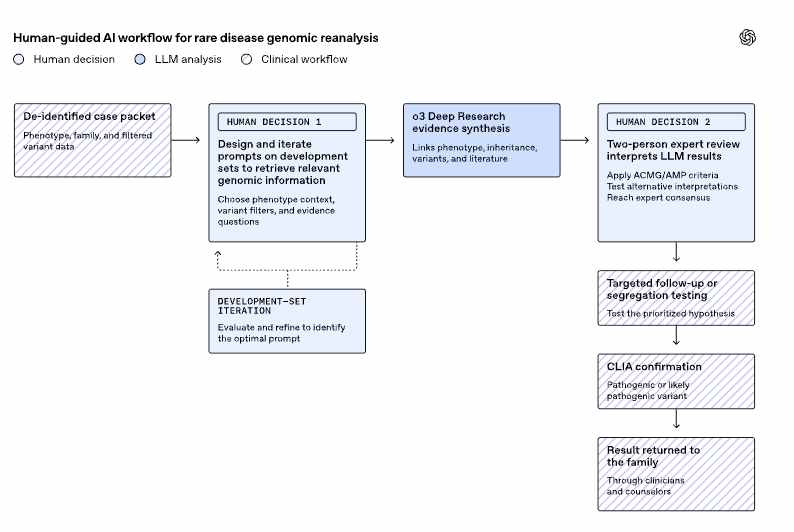
The clearest example came from Boston Children’s and Harvard, where researchers ran 376 unsolved pediatric genetic cases – all previous specialist dead ends – through OpenAI’s o3 Deep Research. The model weighed each case’s symptoms, suspect genes, inheritance patterns and recent literature, and doctors confirmed 18 new diagnoses, roughly 4.8% of a backlog that experts had already given up on. That number sounds small until you remember that about half of rare-disease cases stay unsolved even after full sequencing, with files piling up faster than doctors can revisit them. AI here is not replacing the specialist; it is a tireless second pass over work that would otherwise sit untouched.
Money is starting to follow that logic. Stripe, Anthropic and the OpenAI Foundation backed Intercept, a $500M nonprofit funding tools to block respiratory viruses and clean indoor air, with the stated goal of making routine colds and flu far rarer. The framing is deliberately economic: the group estimates people lose 15-25 days a year to routine infections, adding up to about $600B in global productivity losses. The $500M is meant to carry early research far enough that pharma firms and investors take over the expensive final stretch – a structure worth watching, because it treats public health as an infrastructure investment with a return.
The third story is the most technical, but maybe the most important. Today, there are more than 120 different AI models for biology, and until now they could not work together – each spoke its own format and refused to connect. Stanford’s Brian Hie released Proto, an open tool that finally lets researchers plug these models into one pipeline instead of running each on its own. The result is faster and cheaper: in testing, Proto found working designs 32% of the time after trying just 65 options, where the old approach succeeded only 7% of the time after trying around 1,000. And researchers do not have to write it all by hand – AI agents can write Proto programs themselves, with the team using Claude to do part of the work.
For finance and business leaders, the takeaway is not that AI cures disease this quarter. It is that the ROI clock for AI is splitting in two. One track is the fast, visible productivity story inside everyday software. The other is this slower one: research instruments that compress years of trial and error into months, in healthcare, drug discovery and biology. The second track will not show up in next quarter’s numbers, but it is where some of the largest long-term value – and some of the biggest capital commitments – are quietly being placed.
LLMs & AI Models
- OpenAI’s GPT-5.6 arrives in a limited preview after the White House asked it to stagger the release to approved partners over security concerns.
- The US let Anthropic revive Claude Mythos 5 for a small group of cyber defenders, partly reversing the export ban that pulled its strongest models offline.
- Sakana AI’s Fugu routes each request across a pool of models through one API, pitching multi-agent orchestration as a hedge against export controls.
- OpenAI’s free GPT-5.5 makes ChatGPT noticeably better at understanding context.
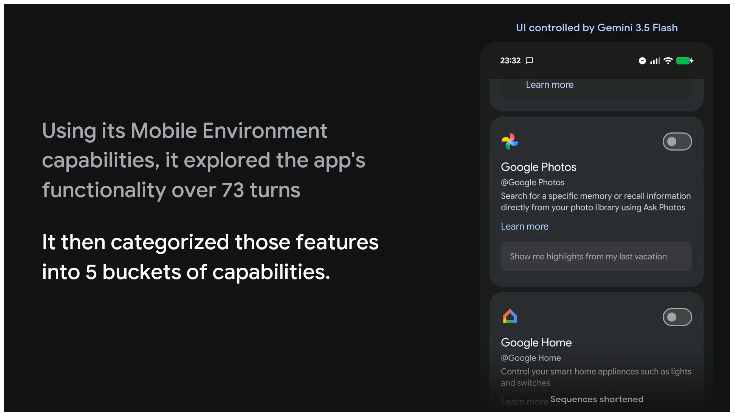
- Google DeepMind built computer-use into Gemini 3.5 Flash, so the model can power agents that navigate browsers, apps and desktops
- Getty Images stock jumped ~120% after a multi-year deal to show its licensed photos inside ChatGPT instead of synthetic ones.
New Tools
- Claude joins Slack as an agentic coworker through Claude Tag, able to act inside channels instead of just answering questions.
- Meta launched a $299 smart-glasses line, its bigger push into AI wearables.
- ByteDance unveiled Seedance 2.5, a model that generates 30-second native 4K AI video.
- Krea open-sourced Krea 2 Raw and Krea 2 Turbo, two image-generation models.
- Mistral’s new OCR model beat rivals in 72% of blind tests at reading documents.
👉 Explore these tools: Krea | Mistral | Claude Tag | Meta Glasses
Other Quick Picks
- Anthropic accused Alibaba of its largest known “distillation” attack, alleging ~28.8M fake Claude queries to copy its models.
- OpenAI designed its first custom AI chip, codenamed Jalapeño, with Broadcom to cut its reliance on Nvidia.
- SpaceX leased $6.3B of Colossus compute to Reflection AI, a major AI-infrastructure deal.
- Google is bankrolling A24 with $75M to build AI tools for filmmakers.
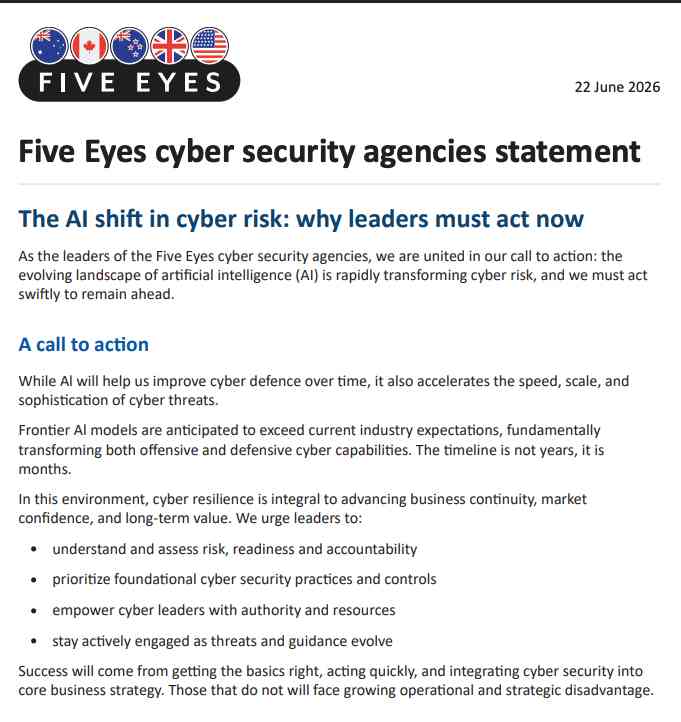
- Five Eyes agencies warned that frontier AI could destabilize governments within months, not years.
- OpenAI’s “Patch the Planet” uses AI to find and fix open-source security flaws at scale.
- Sam Altman said he won’t take OpenAI public for less than a $1 trillion valuation.
- Stripe, Anthropic and the OpenAI Foundation launched Intercept, a $500M nonprofit to curb colds and flu.
- OpenAI’s o3 helped confirm 18 new diagnoses in 376 unsolved childhood rare-disease cases.
- Stanford’s Brian Hie released Proto, an open language to combine 120+ AI biology models into one pipeline.
- Tesla, Sunrun and Renew Home teamed up to build the largest US virtual power plant.
- A new US bill would force companies to report AI risks (AI Incident Reporting Act).
- US tech giants backed RAISE US, a $500M initiative to address AI-driven job disruption.
🇪🇪 AI News from Estonia
- Nortal’s revenue grew 15% to €254.2M, driven by an AI-first development model; it targets 70% of software work to be AI-first by end of 2026.
- A new Estonian report finds AI lifts productivity only alongside changes in workflows, management and skills – on its own it stays stuck at single-task level.
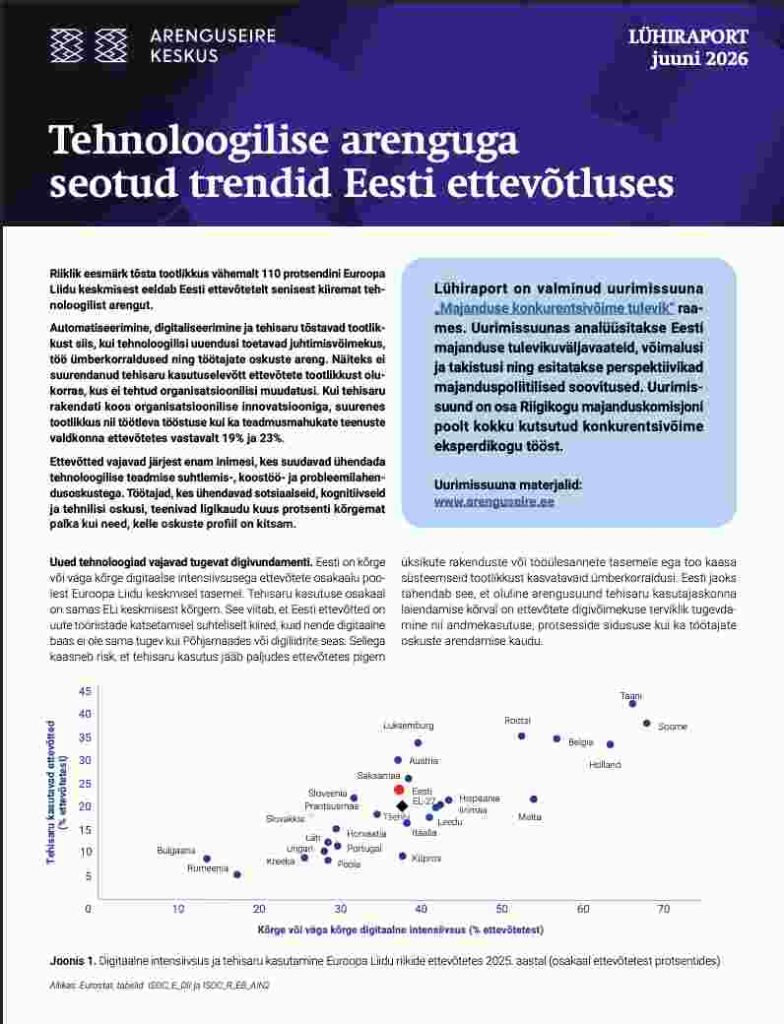
- A ManpowerGroup survey finds employers increasingly value the skills AI can’t match yet: communication, problem-solving, ethics, adaptability and critical thinking.
🎙️ Inside Finance Podcast dropped a second episode with Sylvain OULALA, an experienced street artist and entrepreneur, on how to actually grab and hold attention in a distracted world and why social skills are becoming the rarest competitive advantage in business.
🎧 Listen to Inside Finance Podcast on YouTube and Spotify
🎧 Listen to the podcast on Apple Podcasts.
Want to stay in the loop?
Straight to your inbox: practical AI updates, finance use cases, tools to try, and upcoming trainings.
I cut the noise and send only what’s actually useful.
💼 Exploring how to make AI work in finance? Let’s talk practical use cases – connect with Gerlyn Tiigemäe for expert guidance.
📚 If you would like to participate in one of my trainings or listen to speaking engagements, here are the upcoming ones:
- Training “AI võimalused finantsvaldkonnas” @ Äripäeva Akadeemia, next trainings for beginners @ 31.07 – information, for intermediate level @ 21.08 – information
- Training “AI võimalused projektijuhtidele” @ Äripäeva Akadeemia, next trainings @ 29.06 – information
- I will be doing couple of training together with Eesti.ai algatus , which are all free, so check out their website to find suitable trainings here.