

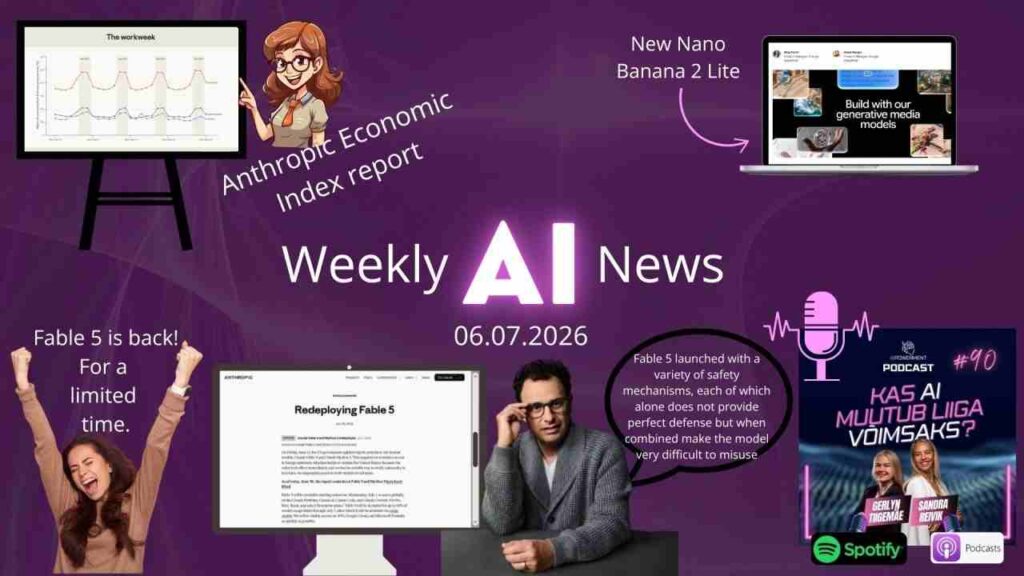
The most important news pieces from the AI world are here for you, whether you’re an AI enthusiast or just wish to keep an eye on what’s going on.
Focus Topic: Asia is buying its way out of AI dependence
This week the most consequential AI money did not come from a lab. It came from governments. South Korea, Japan and China each moved to build sovereign AI capacity, and the common thread is a refusal to stay dependent on American models and chips.
South Korea unveiled at least $880bn in planned investment across what President Lee Jae Myung called the “Three Mega Projects”: chip production hubs, AI data centres and robotics. Lee framed it bluntly as a matter of “survival” and named semiconductors, physical AI and AI data centres as the “triple axis” for the country’s next leap. The politics matter as much as the technology: the spending is aimed at reviving regions outside Seoul, tying an industrial strategy to a domestic equity argument. Samsung and SK Hynix stood on stage with him, and SK Hynix’s valuation had already crossed $1tn in May on AI data-centre demand.
Japan took the self-reliance logic further down the stack. Its plan, led by a consortium called Noetra (with SoftBank and Sony), is to build a homegrown AI model and put 10 million AI-equipped robots to work across sectors by 2040, backed by roughly $6bn of government money over five years. The explicit goal is to reduce dependence on US and Chinese AI, while pointing physical AI at Japan’s aging, shrinking workforce. This is less about chatbots and more about robots, factories and demographics.
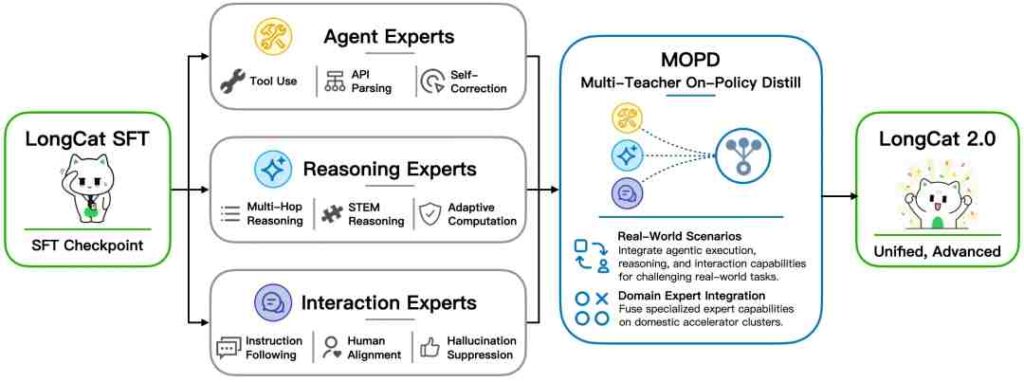
China supplied the proof of concept. Meituan released LongCat-2.0, a 1.6-trillion-parameter model it says was trained entirely on domestically developed chips, with performance it claims matches Google’s Gemini 3.1 Pro. Whether or not the hardware claim fully holds up, the signal is clear: export controls are pushing rivals to build their own stack rather than wait for access.
Here is the finance angle. All of this lands during a global chip shortage that already forced Apple and Microsoft to raise device prices, while US tech giants alone plan to spend around $650bn on AI infrastructure this year. Capital is being committed at national scale, and it is increasingly duplicative by design – every major bloc now wants its own models, its own chips and its own data centres. For businesses, that means a future with more suppliers and more political risk baked into the AI supply chain, not less. The question for any company building on top of AI is no longer only “which model is best,” but “whose infrastructure am I standing on, and what happens if that access changes.”
LLMs & AI Models
- OpenAI previewed GPT-5.6 Sol, its most capable model yet, but kept it locked to ~20 vetted partners at the US government’s request.
- Anthropic launched Claude Sonnet 5, near-Opus quality at Sonnet pricing, though its cybersecurity benchmarks came in below Sonnet 4.6.
- Anthropic brought Fable 5 back after the US lifted export controls, now behind a tighter safety filter and giving the government pre-release access to future models.
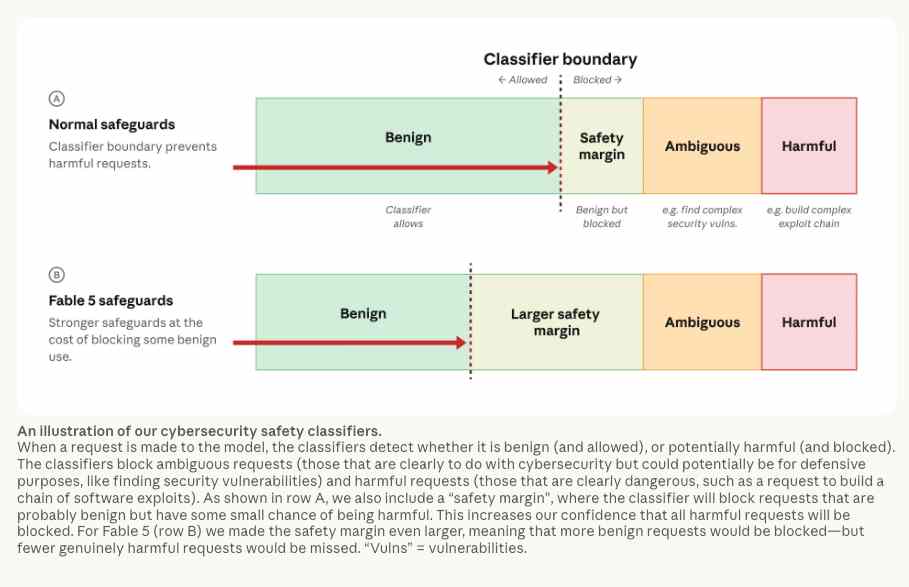
- Meituan released LongCat-2.0, a 1.6T-parameter model it says was trained entirely on Chinese chips and matches Gemini 3.1 Pro.
- Musk says Grok 4.5 (private beta) rivals Claude Opus, trained partly on data from Cursor, the coding platform xAI bought for $60B.
- Meta claims its next model, “Watermelon,” has caught up to GPT-5.5 on key benchmarks and is still in training.
- ByteDance says AI agents can double their learning speed every three months by interacting with real environments – a possible new scaling law.
- Thinking Machines and Bridgewater trained a small model that beat every frontier model on investment tasks at 13.8x lower cost.
New Tools
- Google launched Nano Banana 2 Lite, generating an image in ~4 seconds, plus Gemini Omni Flash for video generation and editing.
- Meta unveiled Brain2Qwerty v2, turning non-invasive brain scans into full typed sentences at 61% average word accuracy, and open-sourced it.
- Cursor brought its agentic coding agent to iPhone and iPad, letting you start or take over running agents from anywhere.
- Anthropic released Claude Science, a research workspace linking 60+ scientific tools, and began its own drug-discovery program.
- SpaceX showed investors a phone-like AI device running its own OS with xAI built in; Musk called the report “utterly false.”
- A leaked Microsoft “Project Aion” points to a lightweight, AI-first Windows with Copilot replacing the Start button.
- Google Maps is building in-app food ordering that places your order so it is ready when you arrive.
👉 Explore these tools: Nano Banana in Gemini | Cursor | Claude Science | Google Maps
Other Quick Picks
- OpenAI offered the US government a 5% stake and Altman pitched a US-led AI safety forum to set the rules.
- New research puts the generative-AI industry at $110B in revenue last year, growing 3x faster than the internet.
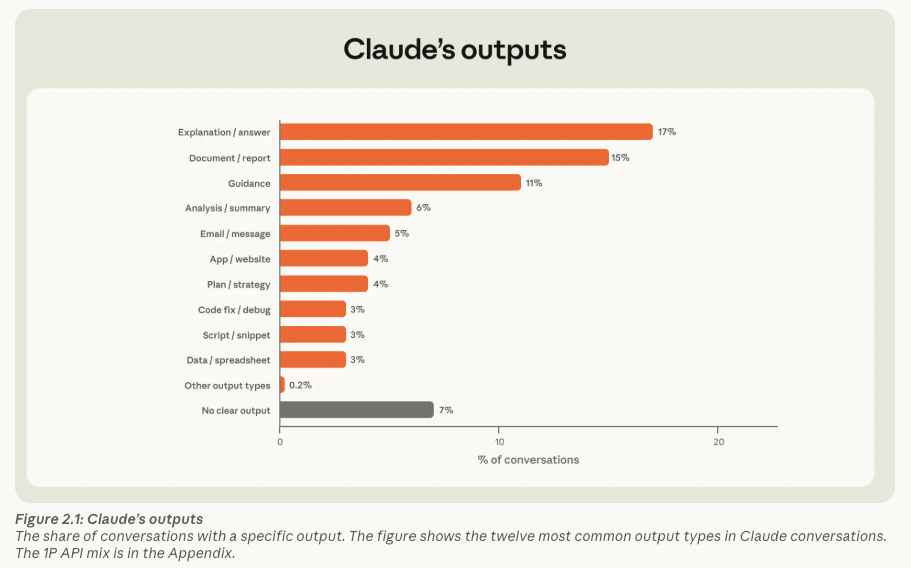
- Anthropic’s Economic Index shows Claude use woven into daily life, with personal chats rising on weekends.
- On the Remote Labor Index, Fable 5 set a record, matching or beating a human pro on 16% of freelance tasks.
- Meta is building a cloud business to rent out spare compute and host its models, taking on AWS and Azure.
- California gave state agencies Claude at half price, the first AI it cleared for government use.
- Microsoft launched a $2.5B “Frontier Company,” embedding 6,000 engineers inside client teams to build AI.
- Spotify stripped 500,000 fake streams from a song after prediction-market bettors flagged the suspicious jump.
🇪🇪 AI News from Estonia
- Koodikool’s new curriculum shifts focus from writing code to problem-solving and using AI wisely; co-author Ivo Kund says AI can help you learn, but not learn for you.
- DriveX, an Estonian machine-vision startup, signed a partnership with one of the world’s largest auto-glass networks, taking its tech international.
- A court fined conservationists for submitting AI-fabricated “hallucinated” claims – a reminder of the risks of using AI in legal filings.
🎙️ AIPowerment Podcast (Estonia’s #1 practical-AI show) dropped episode #90, recapping June’s biggest AI news – the Anthropic Mythos/Fable saga, OpenAI’s next moves, the rise of AI agents, and Estonia’s plan to give AI agents a digital identity.

🎧 Listen to AIPowerment Podcast on Spotify, Apple Podcasts, and YouTube.
Want to stay in the loop?
Straight to your inbox: practical AI updates, finance use cases, tools to try, and upcoming trainings.
I cut the noise and send only what’s actually useful.
💼 Exploring how to make AI work in finance? Let’s talk practical use cases – connect with Gerlyn Tiigemäe for expert guidance.
📚 If you would like to participate in one of my trainings or listen to speaking engagements, here are the upcoming ones:
- Training “AI võimalused finantsvaldkonnas” @ Äripäeva Akadeemia, next trainings for beginners @ 31.07 – information, for intermediate level @ 21.08 – information
- Training “AI võimalused projektijuhtidele” @ Äripäeva Akadeemia, next trainings @ 29.09 – information
- I will be doing couple of training together with Eesti.ai algatus , which are all free, so check out their website to find suitable trainings here.